

Containerised trade and illicit trafficking
90% of world trade moves around the globe in shipping containers. While these trade flows are essential for economic growth, they present opportunities for organised crime to exploit these high-volume containerised maritime trade channels. Global trade routes between Latin America, the Caribbean, West Africa and the European Union are increasingly targeted by criminal networks trafficking cocaine, falsified medical products, illegal timber, waste, and minerals.
As organised criminal networks operate across borders and continuously adapt their routes and modus operandi, no country or law enforcement authority can effectively combat transnational organised crime in isolation. International cooperation, intelligence-sharing, and coordinated action are essential to staying one step ahead. From random inspections to intelligence-led targeting.
With a budget of 6 million euros for three years, the EU Action on Container Control provides a coordinated inter-agency response to combat illicit trafficking along global trade routes, strengthening inspection capacities and moving away from random container checks towards targeted inspections, based on intelligence-led risk assessments.
This new phase of cooperation will focus on three key priorities:
- enhancing the identification of high-risk containers,
- strengthening intelligence and information exchange,
- and deepening international operational cooperation.
As every country context is different, this EU Action will provide targeted support tailored to each country’s individual needs, while aiming for sustainable interventions to foster national ownership, as its success depends on the dedication and professionalism of the officers working every day at ports, airports and land borders.
Expanding a global network of inter-agency units
Building on and aligning with existing EU frameworks of cooperation, such as AIRCOP, SEACOP, SCOPE Africa and COLIBRI, the Action expands and strengthens the PCCP-supported global network of national inter-agency units at key borders along global trade and trafficking routes, currently connecting over 190 inter-agency units across nearly 100 countries, enabling customs, police, and other relevant law enforcement to work side by side and share real-time intelligence. These units have delivered impressive, nationally owned results, including almost 5000 seizures of illicit shipments and the interception of over 800 high-risk passengers over the past year.
The Action will be jointly implemented by UNODC and the WCO, leveraging the operational expertise and global networks, as well as platforms for cooperation and information-exchange of both organisations to translate shared knowledge into concrete results on the ground.
Members of existing inter-agency units also presented operational achievements, challenges, and lessons learned from their daily work at ports, highlighting the importance of intelligence-led targeting, coordinated inspections, and international cooperation in detecting and disrupting illicit shipments.
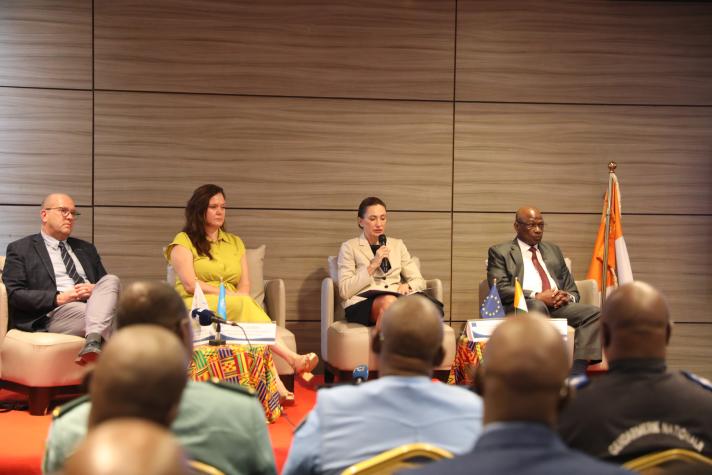
The launch event, hosted in Abidjan by the Government of Côte d’Ivoire, brought together high-level representatives from participating countries and law enforcement experts from across West Africa, Latin America, and the Caribbean, alongside the Deputy Director of Cabinet of the Ministry of Economy, Finance and Budget of the Government of Côte d’Ivoire, H.E. Mr. Vassogbo Bamba, Ms. Martina Brovacek Pecarevic, Head of the Political Section and Deputy Head of Delegation of the European Union Delegation in Côte d’Ivoire, Ms. Chantal Lacroix, Head of the Office of the United Nations Resident Coordinator in Côte d’Ivoire, Mr. Bob Van Den Berghe, Deputy Head of PCCP and Mr. Gilles Thomas, Head of Unit Supply Chain Integrity at the World Customs Organization (WCO).
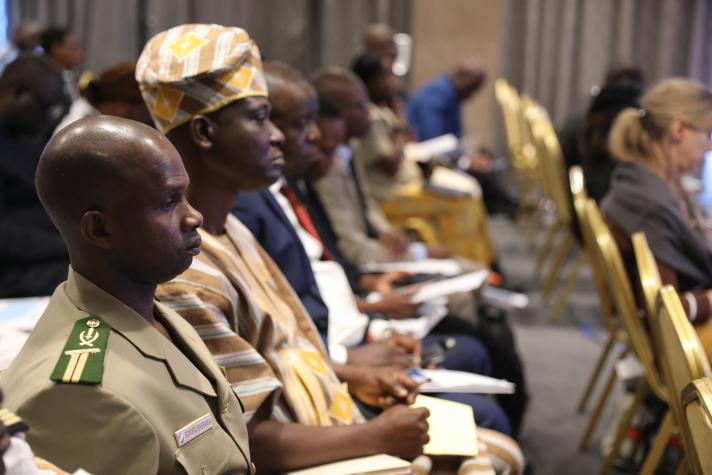
Participants reaffirmed their commitment to strengthening inter-agency cooperation and information-sharing to counter illicit trafficking.
Coordinated response along the global containerised supply chain
In West Africa, the Action will strengthen capacities of existing inter-agency units at key ports in Cotonou, Tema, Dakar, and Lomé, while also supporting national authorities in establishing a new inter-agency unit at the Port of Abidjan in Côte d’Ivoire.
At the same time, it seeks to reinforce cooperation along the entire containerised supply chain, from Latin America and the Caribbean to West Africa and onward to Europe. By supporting Benin, Ghana, Senegal, Togo in West Africa and Brazil, Colombia, the Dominican Republic, Ecuador, and Panama in LAC, the initiative moves beyond national and regional interventions, strengthening interregional cooperation and exchange of expertise. Additionally, the Action will cooperate with Moroccan authorities, leveraging their border management expertise.
The Delegation of the European Union in Côte d’Ivoire underlined its commitment to continued support, noting that PCCP has been a longstanding partner of the European Union under the EU Global Threats programme.
As cooperation deepens across continents, the EU Action on Container Control will play a critical role in strengthening global supply chain security and disrupting organised crime networks operating across borders.
- Publication date
- 19 May 2026
- Threat area
- Fight against Organised Crime