

Fraudulent Travel Documents Fuel Cross-Border Organised Crime
Criminal networks increasingly exploit international air routes to facilitate illicit activities, using fraudulent travel documents to hide identities, evade border controls and move across jurisdictions. Altered or fraudulently obtained documents remain a significant challenge for officers working at borders, requiring specialised expertise, international cooperation and continuous adaptation to evolving criminal methods.
Effective border management depends on the ability of frontline officers to identify these documents, assess risks and exchange information with counterparts across borders. Strengthening these capacities is particularly important at international airports, where high volumes of passengers and complex travel routes create opportunities for organised criminal groups to exploit vulnerabilities.
Cooperation at Viru Viru International Airport
To this end, the the UNODC Passenger and Cargo Control Programme (PCCP), together with Fundación para la Internacionalización de las Administraciones Públicas (FIAP), conducted joint operational action days at Viru Viru International Airport in Santa Cruz de la Sierra, Bolivia, bringing together frontline officers across the region alongside representatives of key airlines, such as Avianca, BoA Airlines, LATAM, Air Europa and Paranair.
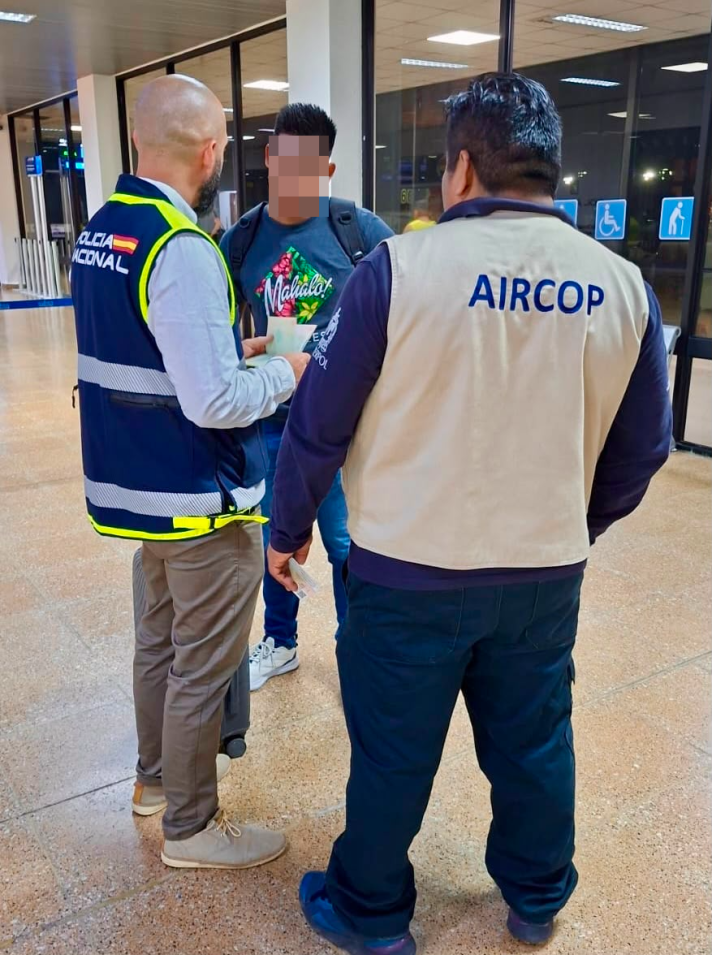
During these days, a regional specialised training, taking place at the airport from 6 to 8 July 2026, brought together officers working in inter-agency units at airports across the region, which are supported by UNODC PCCP under the Airport Communication Project (AIRCOP), now in its sixth phase, funded through the EU Global Threats Programme. These units bring together customs, police, immigration and other relevant law enforcement under one roof for joint trainings and exchange of operational best practices, as well as information-sharing via secure communication platforms.
Participants included officers from Bolivian Customs (Aduana Nacional de Bolivia), Police (Policía Boliviana), General Directorate of Migration (Dirección General de Migración), and Air Navigation (Navegación Aérea y Aeropuertos Bolivianos), as well as frontline officers from Argentina, Brazil and Paraguay.
Building Practical Skills to Detect Document Fraud
The training focused on strengthening participants’ technical knowledge of document examination, including the identification of common alteration techniques, counterfeit production methods and indicators of fraudulent documentation. Through theoretical and practical exercises at the airport, officers analysed legitimate and fraudulent documents and explored approaches for improving document verification procedures in operational environments. Participants also examined the links between fraudulent documentation and other forms of transnational organised crime, including migrant smuggling.
Strengthening Regional Networks for Border Security
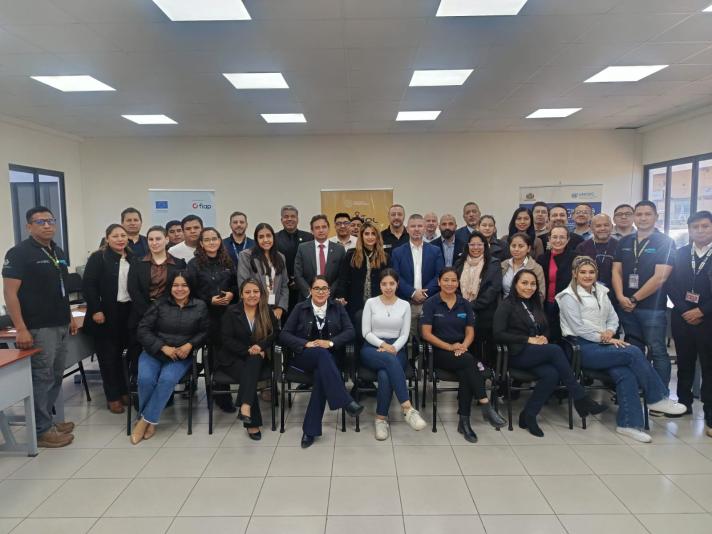
The activity promoted operational exchanges among frontline officers working in PCCP-supported inter-agency units across the Southern Cone, sharing experiences and best practices on passenger screening, document checks and intelligence-led targeting, further strengthening this regional professional network, which also connects to the global network of national inter-agency units PCCP supports at key borders along global trade and trafficking routes, currently connecting over 190 inter-agency units across 94 countries, enabling frontline officers to work effectively side by side.
Through AIRCOP, the European Union continues to support countries in strengthening airport security capacities and improving cooperation between frontline officers regionally and globally, contributing to safer borders while facilitating legitimate international travel.
Project Background
AIRCOP aims to strengthen the capacities of international airports to detect and intercept drugs, other illicit goods and high-risk passengers and to share real-time operational information between origin, transit and destination countries to disrupt cross-border illicit flows and criminal networks. AIRCOP aims to build, consolidate and strengthen interdiction capacities at selected international airports in Africa, Latin America, the Caribbean and South-East Asia and to facilitate real-time transmission of operational information at regional and transregional levels, including through connection to international law enforcement databases, as well as with law enforcement counterparts at airports in the EU, building long-term formal and informal cooperation.
- Publication date
- 20 July 2026 (Last updated on: 20 July 2026)
- Threat area
- Fight against Organised Crime