

Protecting public spaces requires security services to detect risks early and coordinate a rapid response. At major sporting events, explosives, hostile actors or attacks can endanger athletes, spectators and staff. In preparations for the 2026 Youth Olympic Games in Dakar, Senegalese agencies therefore combine specialist training with exercises that test how different services work together.
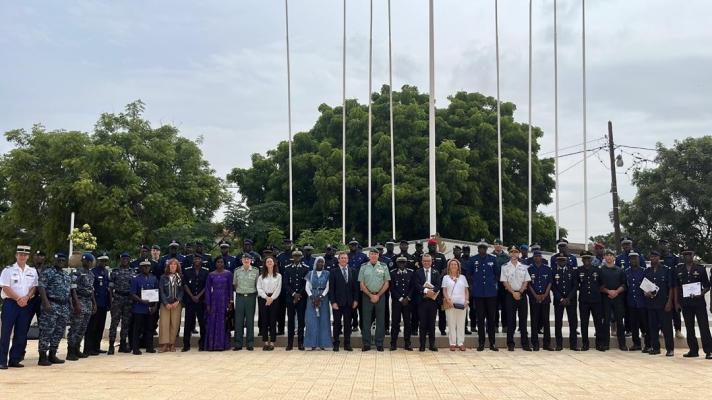
In Dakar, Senegalese security services carried out an in-country training and an interagency national exercise with support from the European Union funded Public Spaces+ project. The training on 6 and 7 October 2026 was designed to assess and certify the readiness of units, as well as the coordination and structures for the IV Youth Olympic Games, scheduled for 31 October to 13 November 2026. In parallel, three specialised interagency training courses on command and control, risk analysis, and explosive search and detection by K-9 units ran from 27 September to 9 October 2026. This training concluded with the project handing over an initial equipment package at the closing ceremony on 9 October.
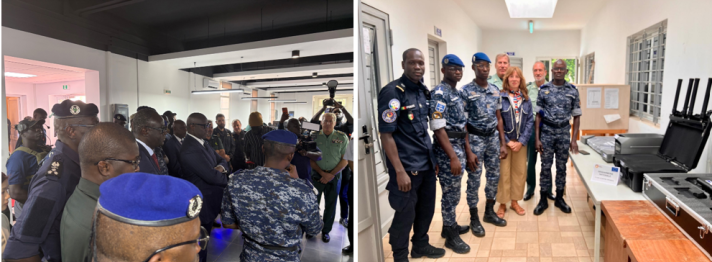
Senegalese trainers lead the training
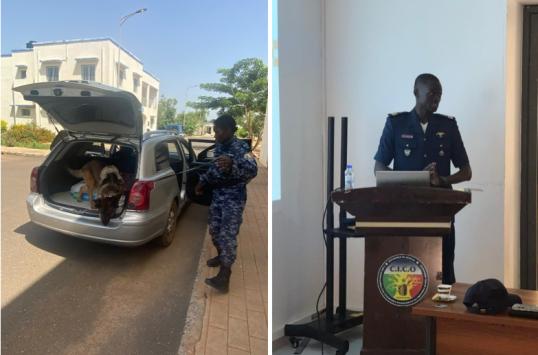
The three specialised training courses replicated the ‘train-the-trainers’ activities that took place in Spain in the first half of 2026. Senegalese trainers led the sessions under the guidance of experts from Spain’s Guardia Civil and the EU High Risk Security Network (HRSN). A total of 18 Senegalese trainers and 32 trainees from the National Police, the National Gendarmerie and the Senegal’s counter-terrorism fusion centre (CICO-LAT) participated. Using the techniques acquired in Spain, the co-developed technical handbooks, and Public Spaces+ methodological approach, Senegalese law enforcement is establishing a sustainable programme through which trainers can pass on their skills to colleagues. This approach is intended to support continued training within Senegalese institutions beyond the immediate preparations for the Games, ensuring the sustainability of these activities.
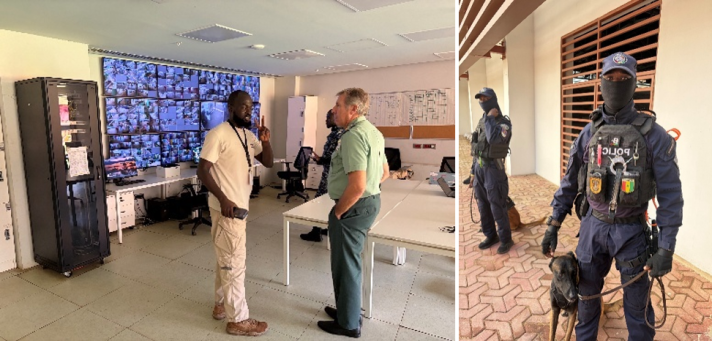
The courses covered various coordination and assessment risks and response approaches. Equipment was also provided to Senegalese institutions to support them in delivering further trainings in areas such as medical response, K-9 units searching for explosives, drone-related incidents and wider security risks. The initial handover included four tactical drones, two counter-drones, two solar-powered charging stations and specialise tactical police equipment (including telescopes and anemometers).
Protecting public spaces also requires a comprehensive approach that tests how police capacities work together. The project therefore promotes large-scale interagency exercises to practice and assess coordination, readiness and preparedness at major events.
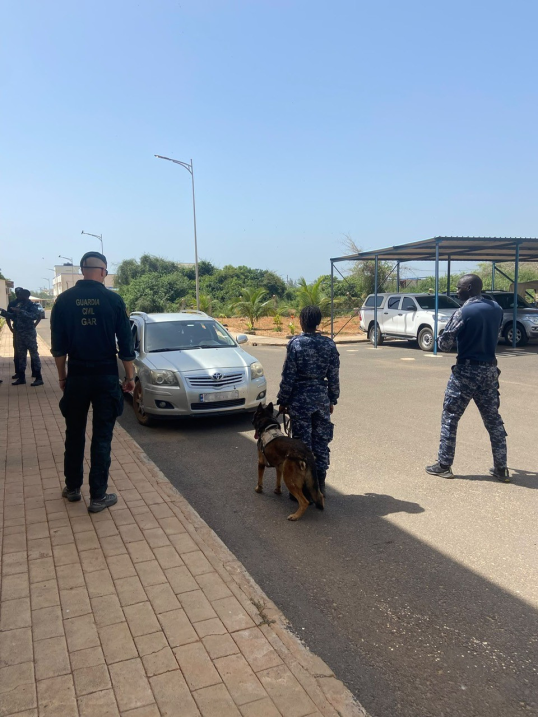
Testing coordination at the Games venues
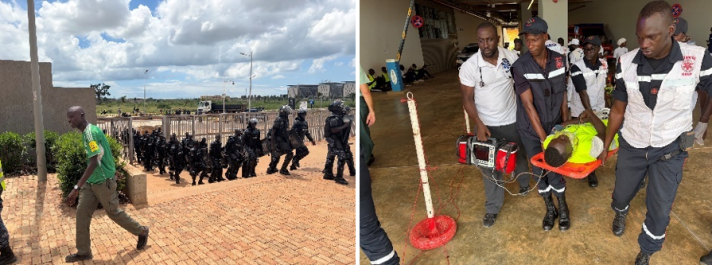
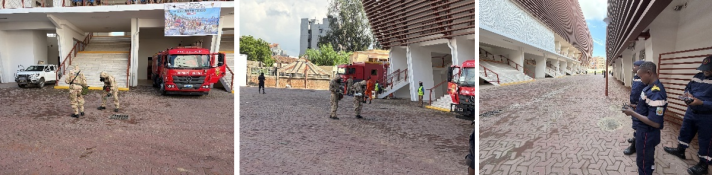
As part of the preparations for the IV Youth Olympic Games, over 2,800 members of the national police, gendarmerie, military, fire service and other institutions took part in the two-day exercise in Dakar. Set in the Games venues, the exercise involved realistic simulation scenarios to test security units' capabilities in public order, security, drone-related incidents, improvised explosive devices (IEDs), chemical, biological, radiological and nuclear (CBRN) threats, and terrorist attacks. The project monitored the exercise and provided advice during the implementation of the exercise, observing how units applied their training in simulated operational situations.

Project background

Public Spaces + is implemented under the EU Global Threats programme, funded by the European Union.
The EU-funded project works with three partners in Africa: Kenya, Ghana and Senegal, all of which are neighbours to the main epicentres of terrorism.
The project aims at strengthening the capacity of partner countries by developing sustainable training systems that are integrated into their curricula, all while adhering to the highest methodological standards and fully respecting human rights, gender equality, and the rule of law, in line with the EU's political priorities for security and counterterrorism.
For more information, download the project factsheet.
- Publication date
- 26 October 2026
- Threat area
- Counter-Terrorism, Prevention of Violent Extremism