

The growing complexity of terrorist attacks in public spaces, particularly those involving multiple victims, creates a need to increase specialised tactical medical and response capabilities. Police services need to be prepared to identify security risks, coordinate their response and provide rapid on-the-ground support, as the first few minutes of the response are crucial for victims. The increasing use of drones by terrorist groups such as JNIM and ISIS in the Sahel region adds further challenges, requiring police forces to adapt in order to understand both how drones operate and how to respond to their misuse.
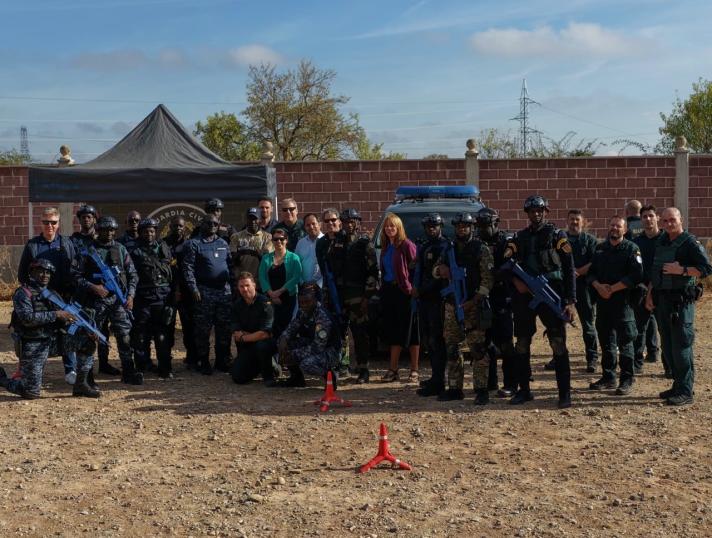
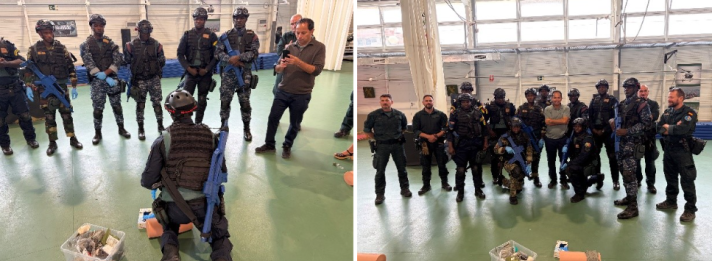
Through the European Union funded Public Spaces+ project, two Senegalese law enforcement delegations, comprising 15 members of the National Police, the Gendarmerie Nationale, and Senegal’s counter-terrorism fusion centre (CICO-LAT), took part in two courses in Logroño, Spain. Each course lasted two weeks and was delivered by the Spanish Guardia Civil's UAR (Anti-Terrorism Unit). The courses covered the use of drones and counter-drone systems, as well as medical response and rescue procedures for protecting public spaces in the event of a potential terrorist attack. Participants used equipment and operational guidance provided by the project, linking the practical training to resources intended for their subsequent use in Senegal.
Putting theory into practice
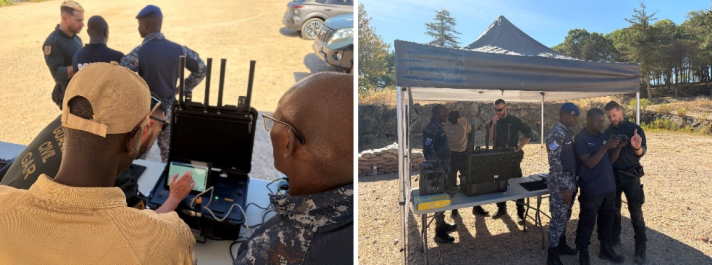
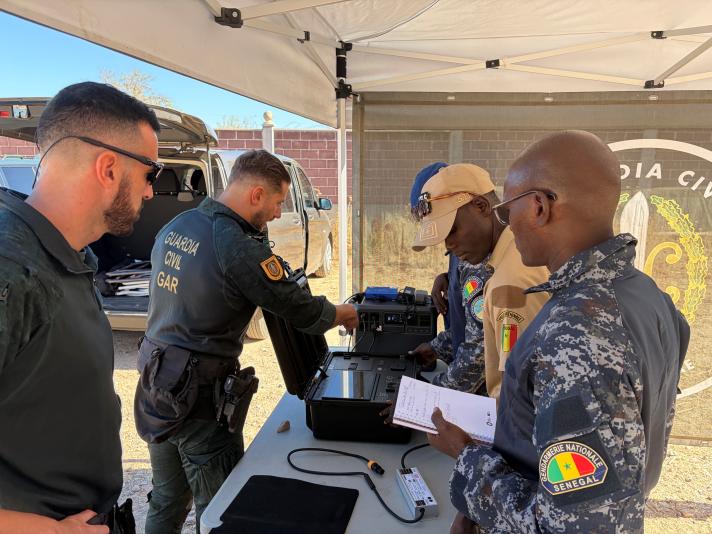
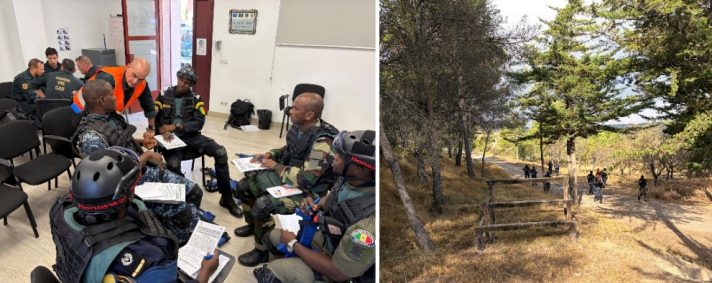
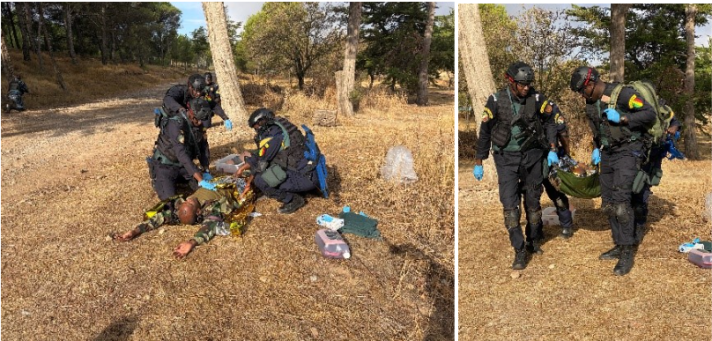
The two courses were designed to be highly practical, offering participants the opportunity to apply their knowledge through simulated scenarios and exercises. Senegalese participants underwent drone training that included operating drone and counter-drone systems under the supervision of the Guardia Civil instructors. Medical response exercises combined preparation in the classroom with field practice, including tactical rescue and victim extraction techniques in simulated high-risk areas such as fires. By practicing these tasks in an exercise setting, participants were equipped with the knowledge to act as future trainers themselves. These training sessions will be replicated in Senegal using the donated equipment and methodologies, enabling participants to take ownership of these activities and ensure the continuity of the training.
EU support for Senegal’s preparation to host the Youth Olympic Games
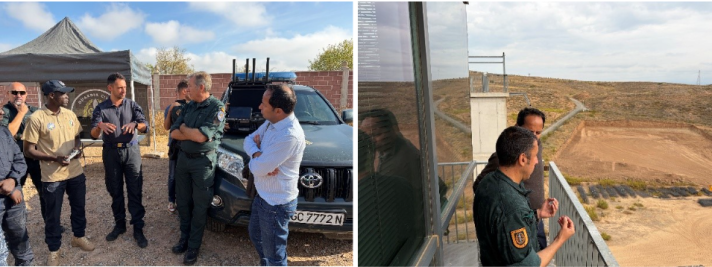
Public Spaces+ programmer manager from the European Commission’s Services for Foreign Policy Instruments (FPI) observed the activities for two days and discussed the training with the Senegalese participants, Guardia Civil instructors, and experts from the EU High Risk Security Network (HRSN). Representatives of the implementing agency (FIAP,) were also present.
Training-of-trainers activities in Spain form a key part of supporting the capacity of Senegalese law enforcement, including in preparation to host the upcoming IV Youth Olympic Games in Dakar between 31 October to 13 November 2026. These two training exercises complement Public Spaces+ activities provided over the last year and a half, covering command and control, K-9 units, risk analysis, tactical police marksmanship and first response. The wider aim is to support Senegalese capacity to protect public spaces in preparation for the Games, as well as during major event beyond.
Project background

Public Spaces + is implemented under the EU Global Threats programme, funded by the European Union.
The EU-funded project works with three partners in Africa: Kenya, Ghana and Senegal, all of which are neighbours to the main epicentres of terrorism.
The project aims at strengthening the capacity of partner countries by developing sustainable training systems that are integrated into their curricula, all while adhering to the highest methodological standards and fully respecting human rights, gender equality, and the rule of law, in line with the EU's political priorities for security and counterterrorism.
For more information, download the project factsheet.
- Publication date
- 5 October 2026
- Threat area
- Counter-Terrorism, Prevention of Violent Extremism