

Over 36 months, the project will help ten partner countries detect, prevent, and respond to foodborne threats - ranging from accidental contamination to intentional sabotage and fraud - by strengthening legal frameworks, analytical capacities, and crisis management mechanisms.
Tackling the Triple Threat: Food Safety, Defense, and Fraud
Food can nourish or harm. In the African Atlantic Façade (AAF) region, where food systems are increasingly complex and fragile, the risks of contamination, whether accidental, intentional, or fraudulent, present a growing danger to public health, economies, and trust. In 2022, foodborne diseases accounted for an estimated 137,000 deaths in Africa and 91 million cases of acute foodborne sickness[1]. In response, the European Union’s CBRN Centres of Excellence Initiative has launched Project P108 on “Strengthening the control and analytical capabilities to improve the security of the food chain in the AAF”.
Targeted at ten partner countries -Benin, Cameroon, Ivory Coast, Gabon, Liberia, Mauritania, Morocco, Senegal, Sierra Leone, and Togo- the project aims to help them strengthen their legal, analytical, and crisis response capacities to food.
“Food security isn’t just about quantity: it is about safety and trust,” said Gilles Bornert, Team Leader of Project P108. “This project recognises that food safety, food defense, and food fraud are interlinked challenges that must be tackled together, through collaboration between legal, technical, and community stakeholders.”
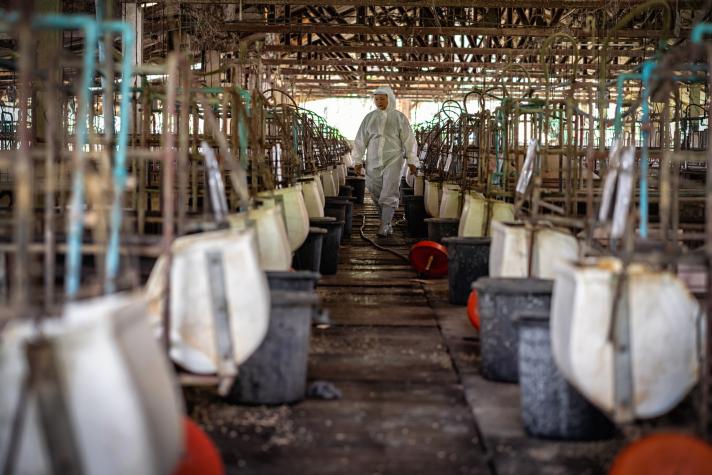
Project P108, which officially kicked off in Brussels in May 2025, is designed to help countries prevent and manage risks such as:
- Food safety hazards from natural or accidental contamination (e.g. botulism, chemical residues),
- Food defense threats from malicious or terrorist acts (e.g. sabotage in processing plants),
- Food fraud involving deceptive practices for profit (e.g. counterfeit ingredients or mislabeling).
"Contaminated food doesn’t just threaten lives, it disrupts economies, damages trade, and deepens inequalities. With Project P108, the EU is investing in the legal, technical, and human systems needed to reduce these risks, unlock regional cooperation, and promote safer food for all.”
A Regional Strategy with National Impact
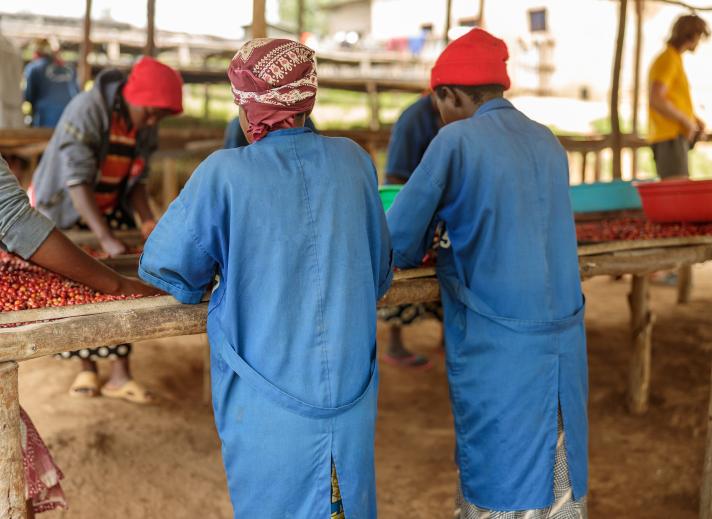
Project P108 is structured around six interconnected work packages that include legal reforms, capacity building, emergency preparedness, and awareness-raising efforts. These actions are already underway across the region, with inception missions launched in Benin, Cameroon, Côte d’Ivoire, Gabon, Mauritania, Senegal and Togo by mid-July 2025. National legal and technical experts are being deployed to assess current frameworks and infrastructure, while consultations are being held with ministries, laboratories, food industry actors, women’s organisations and consumer protection associations.
“This is an ambitious project, tackling three distinct technical areas across ten countries with diverse regulatory and institutional landscapes,” notes Gilles Bornert. “We are now in the outreach and diagnosis phase: identifying the key actors and assessing existing systems. This will serve as the foundation for the second phase, where we will work with national and regional partners so they develop practical, context-specific solutions to anticipate, detect, and respond to food-related crises”.
A defining feature of Project P108 is its emphasis on inclusion, particularly the role of women, in food systems. Women, especially in rural areas, are often the primary handlers of food in households and local markets, placing them at higher risk of exposure to foodborne hazards. Despite their central role, they remain underrepresented in formal systems of decision-making and crisis response.
“Food safety must never be a gender-blind issue. Women are often on the front lines of food preparation, trade, and caregiving but they remain underrepresented in formal decision-making. By integrating women into national systems and regional networks, P108 supports a more inclusive and effective response to food-related risks.”
By the end of the project, countries are expected to have access to:
- Revised legal frameworks and concrete proposals to strengthen national food laws, aligned with international standards.
- Improved capacity to identify and manage food risks, through training of national stakeholders on hazard detection, monitoring, and international food safety standards.
- Developed or updated emergency preparedness plans.
- Strengthened awareness and coordination mechanisms, including gender-inclusive approaches.
- Regional collaboration reinforced through joint tabletop and field simulation exercises.
Importantly, P108 is fully aligned with the African Union’s Food Safety Strategy for Africa (FSSA) and the WHO Global Strategy for Food Safety, ensuring coherence with continental and global goals.
About the EU CBRN CoE Project 108
Project P108 is embedded within a collaborative governance framework that prioritises local ownership and regional cooperation. The initiative relies on a dual structure: regional coordination via the Centres of Excellence, and national leadership via the appointment of National Focal Points (NFPs).
NFPs play a crucial role in ensuring that project activities are rooted in national priorities by representing their country within the EU CBRN CoE framework, coordinating stakeholders across sectors such as ministries, laboratories, industry, and civil society, facilitating project implementation and access to relevant technical and legal expertise, and acting as the primary link between national authorities, the implementing partners, and EU institutions.
This governance structure helps guarantee that solutions developed under P108 are not only technically sound but also context-specific and sustainable.
Project 108 is implemented by a consortium led by Expertise France, and comprised of GIZ, University of Liège and France Vétérinaire International. It is implemented under the EU CBRN Risk Mitigation Centres of Excellence, a global Initiative funded and implemented by the EU as part of its goal to promote peace, stability and conflict prevention.
Download Project 108 factsheet.
[1] https://www.echocommunity.org/resources/876226e7-6a6c-4e2a-8e6c-7e43a82…
- Publication date
- 2 September 2025 (Last updated on: 2 September 2025)
- Threat area
- CBRN Risk Mitigation