

When Chemical, Biological, Radiological or Nuclear (CBRN) disaster strikes, every second counts. For emergency responders, the challenge is not only to save lives but also to lead critical investigations, a task made even more complex when multiple agencies must work together under dangerous conditions.
Connecting expertise and commitment to CBRN preparedness in Manila
To tackle these high-stake scenarios, the European Union funds a series of advanced trainings and exercises worldwide through its CBRN Risk Mitigation Centres of Excellence (CoE).
The latest stop? The Philippines, where 4 international experts led an intensive week of tabletop exercises and drills.
This initiative brought together police officers, forensic specialists, and the Bureau of Fire Protection, all focused on mastering the delicate balance between emergency response and criminal investigation. The training focused on evidence preservation, profiling, decontamination, and forensic sampling techniques.
From theory to action
Over the course of the week, 20 responders from the Philippines National Police and the Bureau of Fire Protection worked side by side, sharpening their skills and boosting national preparedness for future CBRN emergencies. The goal: to ensure the Philippines is ready to protect both public safety and the integrity of criminal investigations in the face of complex threats.
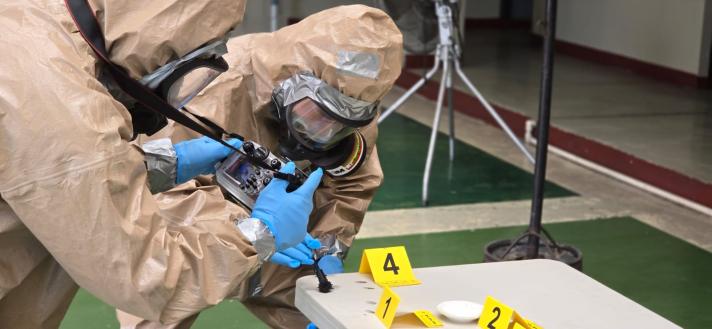
The training began with a theoretical module, arming participants with the essential knowledge for handling CBRN incidents. The real test, however, came during hands-on drills simulating contaminated crime scenes.
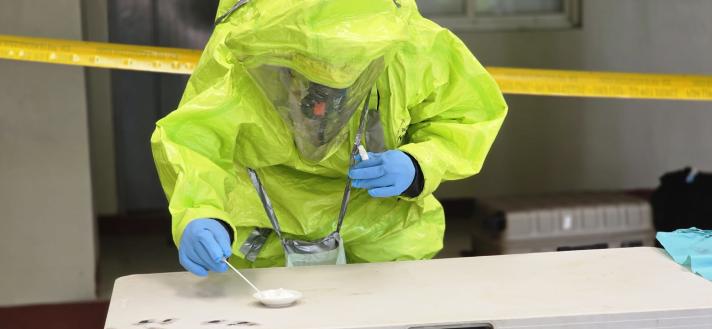
Here, responders practiced preventing cross-contamination, collecting evidence, managing suspect decontamination, and coordinating safe weapons handling. All this was done under the pressure of a simulated hazardous environment, putting teamwork to the test and demanding precise coordination between agencies.
Building national resilience, strengthening global safety
CBRN emergencies do not know borders. This is why, by strengthening their own procedures, countries like the Philippines contribute directly to global safety. When local agencies are equipped with the right skills and resources, they can contain incidents swiftly and cooperate more efficiently with international partners.
By bridging international expertise and local commitment, the European Union CBRN Centres of Excellence contribute directly to global preparedness to rare but potentially catastrophic events.
This initiative was delivered under Project 106 – TEST, funded by the European Commission's Service for Foreign Policy Instruments under the EU CBRN Risk Mitigation Centres of Excellence.
Project 106 is implemented by GOPA, ISEM Institute (which provided a training accredited by the Slovakia Ministry of Education), the National Crisis Centre and the University of Lodz.
- Publication date
- 12 December 2025
- Threat area
- CBRN Risk Mitigation