

Food safety represents one of the most critical -and often underestimated- dimensions of public health protection and biosecurity. Unsafe food can cause disease outbreaks, destabilise supply chains, and impose significant economic costs on households and governments alike. Beyond accidental contamination, the deliberate tampering with food supply chains constitutes a recognised biological and chemical security threat, addressed by the “food defence” approach.
As African economies deepen integration under the African Continental Free Trade Area (AfCFTA), countries face growing pressure to align their food safety systems with international standards. This requires not only regulatory modernisation, but also coordinated institutions, reliable laboratory infrastructure, and structured crisis management mechanisms that can prevent, detect, and respond to risks across the entire food chain.
A four-day workshop to advance systemic reform
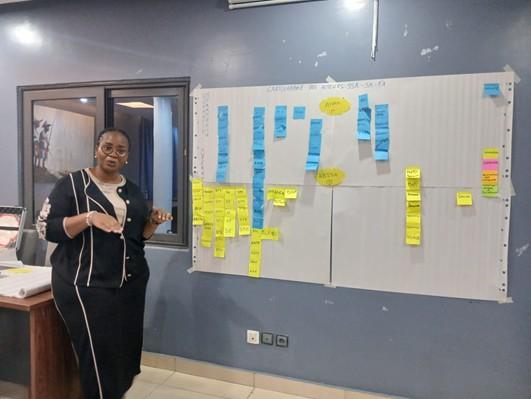
Over four days, ten key national stakeholders gathered -representatives of public institutions, control authorities, analytical laboratories, and technical experts- with a clear objective. They sought to strengthen Benin's legal, institutional, and technical framework across three interconnected areas: food safety, food defense and food fraud control -approached through an integrated One Health lens.
On 27 March, the EU Delegation to Benin attended the closing session, affirming the European Union's commitment to supporting Beninese authorities throughout this reform process.
Four priorities for lasting change
- Developing a modern framework law: While Benin already has a solid but fragmented legal foundation spread across sector-specific texts, the workshop supported ongoing efforts to build a more coherent legal architecture integrating the One Health approach.
"Benin has the building blocks; what it needs now is the architecture. A coherent framework law isn't a bureaucratic exercise; it's the foundation that makes everything else work, from lab accreditation to market access under AfCFTA."
Emmanuelle Bourgois, Key Legal Expert, Project P108
- Improving Institutional governance: Observed overlaps between authorities, as well as across ministries and local bodies, were discussed with a view to clarifying mandates and strengthening coordination - ensuring better consumer protection from farm-to-fork.
- Analytical laboratory capacity: Participants examined how to rationalise existing resources through coordinated laboratory networks, risk-based national surveillance plans, harmonised analytical methods, and the progressive strengthening of accreditation systems.
- Food crisis management: formalising product withdrawal and recall mechanisms, reinforcing operator accountability, and establishing a food defence framework to improve prevention and response to deliberate or accidental food safety incidents.
"Food defense isn't a theoretical risk in this region, it's an operational gap. Closing it means protecting not just consumers, but the entire food economy."
Pierre Gavard, Key Technical Expert, Project P108
A country-owned roadmap for reform
The concrete outcome of this workshop is a shared national roadmap, built with and by the stakeholders responsible for implementing it. This exercise strengthens the foundation for regulatory reform in Benin and supports the country's integration into safer, more resilient food systems aligned with international requirements.
It also demonstrates the value of a participatory, country-owned approach; one that brings together government institutions, technical experts, and development partners around shared priorities.
Project background
This action was implemented with the support of the European Union through the EU CBRN Risk Mitigation Centres of Excellence Initiative.
Project P108 "Strengthening the control and analytical capabilities to improve the security of the food chain in the African Atlantic Façade" aims to build national institutional capacity in food safety, food defense, and food fraud control through legal and technical analyses, training activities, national and regional workshops, and crisis management exercises.
The project is implemented by Expertise France in partnership with France Vétérinaire International (FVI), the Deutsche Gesellschaft für Internationale Zusammenarbeit (GIZ), and the University of Liège.
To learn more, download the project factsheet.
- Publication date
- 27 April 2026
- Authors
- Service for Foreign Policy Instruments | European Union Institute for Security Studies
- Threat area
- CBRN Risk Mitigation
- CBRN areas
- Bio-safety/bio-security
- Safety and security
- CBRN categories
- Biological
- EU CBRN CoE Region
- AAF - African Atlantic Façade