

Why consistency matters in CBRN emergency medicine
CBRN incidents can escalate quickly from routine industrial, medical, or transport-related situations into complex emergencies involving contamination, multiple casualties, and intense public concern. In such events, outcomes depend not only on plans and equipment, but also on the reliability of training, including whether responders and hospitals apply the same procedures, terminology, and decision-making processes under pressure. Repeated national delivery is therefore essential to quality assurance, helping ensure that knowledge is retained, standards are applied uniformly, and new staff can be trained without delays.
Third national training strengthens quality assurance and national ownership
The third National CBRN Emergency Medicine Training was delivered in Baku, with the involvement of national partners, including the Academy of the Ministry of Emergency Situations of the Republic of Azerbaijan and the Azerbaijani Medical Territorial Association (TABIB). The action was implemented under EU CBRN CoE Project 88, “Strengthening of CBRN Medical Preparedness and Response Capabilities in South East and Eastern European countries”, funded by the European Union and implemented by the Science and Technology Centre in Ukraine (STCU) as part of the EU CBRN Risk Mitigation Centres of Excellence Initiative.
Unlike earlier editions focused primarily on initial roll-out, the third national course served as a quality-control milestone. It assessed the national training team’s ability to conduct the programme consistently and independently, maintaining the same instructional quality, structure, and learning outcomes over time. The course, therefore, demonstrated not only continued engagement but also the maturity of Azerbaijan’s national training capacity.
Training that follows the full chain of response
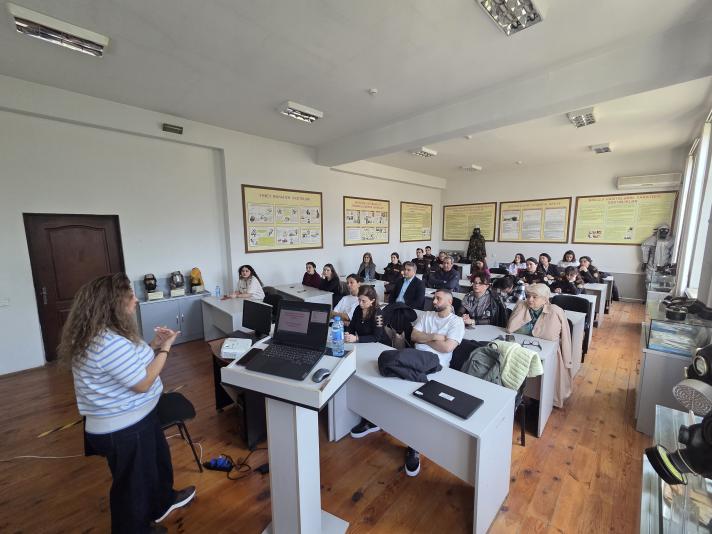
The programme continued to address the needs of the full emergency medicine response chain. Sessions supported pre-hospital responders with core actions such as rapid assessment, triage, decontamination, and stabilisation. Hospital teams strengthened preparedness for receiving contaminated patients, applying contamination control measures, and coordinating with field services. Managers and institutional leaders focused on decision-making, resource allocation, and coordination mechanisms required during large-scale incidents. Para-medical and medical personnel further developed clinical understanding relevant to CBRN-related diagnosis, treatment, and patient management.
This whole-of-system approach supports interoperability, ensuring that procedures, roles, and communication pathways remain aligned from the incident scene to hospital care and strategic coordination.
Practical delivery and professional exchange
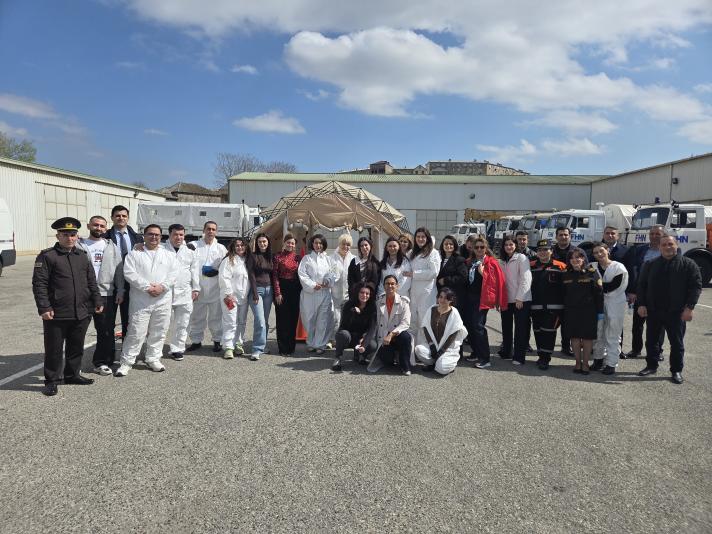
The course combined interactive instruction with practical application through exercises and scenario-based work. Participants tested how to apply procedures in realistic conditions, practiced cross-institution coordination, and strengthened decision-making under time pressure. In parallel, the training encouraged professional exchange among responders and healthcare staff, supporting a shared operational language and stronger working relationships between institutions.
Sustained impact for Azerbaijan and the wider region
Delivering a third national training consolidates Azerbaijan’s progress toward a sustainable CBRN emergency medicine training system. It demonstrates that the national team can maintain quality across repeated deliveries, a key requirement for long-term preparedness and for scaling training to wider audiences. The experience also contributes to regional resilience by strengthening a consistent approach to CBRN medical preparedness across South East and Eastern Europe.
Project background
EU CBRN CoE Project 88, “Strengthening of CBRN Medical Preparedness and Response Capabilities in South East and Eastern European countries” supports partner countries in improving medical preparedness, response coordination, and sustainable training capacity for CBRN incidents through national-level training and institutional cooperation.
- Publication date
- 20 April 2026
- Threat area
- CBRN Risk Mitigation
- CBRN areas
- First response
- CBRN categories
- Biological
- Chemical
- Nuclear
- Radiological
- EU CBRN CoE Region
- SEEE - South East and Eastern Europe