

Under iARMS V, funded by the EU, INTERPOL is implementing TRIGGER operation.
Operation TRIGGER X will be the first operation targeting firearms trafficking connecting Europe and Asia. iARMS V is aiming to target hotspots around currently or recently active conflict zones, which is why TRIGGER X has invited countries neighboring Ukraine, including Poland and Moldova, but also: the Western Balkans (Albania, Bosnia and Herzegovina, Montenegro, North Macedonia and Serbia), Sweden, Bulgaria and countries with strong interest in countering firearms threat and perceived high threat of prevalence of this crime type. We are further connecting these countries to Asia with a bridge built by the South Caucasus (Armenia, Azerbaijan, Georgia) and Türkiye. The threat of arms trafficking from Afghanistan is tackled through participation of Pakistan and Central Asia (Kazakhstan, Kyrgyzstan, Tajikistan, Turkmenistan and Uzbekistan). Even though the primary threat to be tackled are the conflict arms, we are also noting high threat of copycat firearms trafficking, on which we are aiming to get more operational data.
The operation itself is divided into three phases:
- Pre-operational phase during which countries create their national operational plans and gather intelligence; iARMS V also relies on the support of UNODC, who is, in partnership with UNAMA, collecting and analyzing information from Afghanistan on firearms thus further supporting countries to prepare for the Operation.
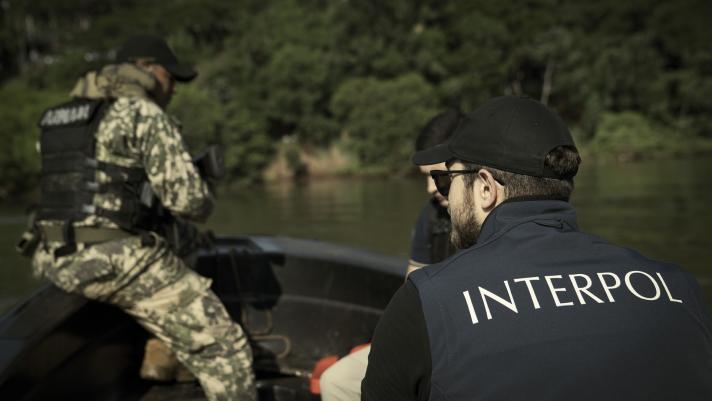
- Operational phase during which police actions are executed, including targeted controls, increased vigilance and additional officers deployed to selected hotspots and border points. A number of tools will be deployed, including INTERPOL Databases and Mobile Device allowing offline access to selected databases through for officers in the field. An operational hub will be set up in INTERPOL HQ, to facilitate cooperation amongst participating countries during the operation;
- Post-Operation phase : operational results are gathered and analysed. INTERPOL and UNODC are providing investigation support.
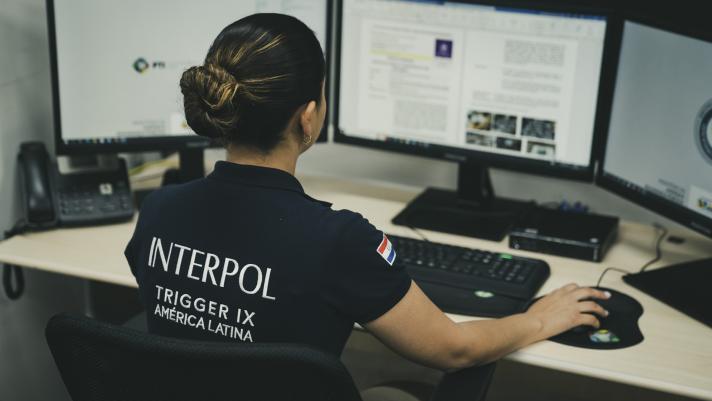
As a result of this operation, we aim to generate analytical report mapping the possible routes, modus operandi and potential organized groups to start joint investigations and develop further on specific cases. iARMS V works with partners such as Europol, ATF, Frontex, SELEC and EMPACT Firearms, WCO, HSI allowing to see links on a regional and global level, ultimately leading to wider information sharing and trustful cooperation
About iARMS V
Illicit firearms trafficking is largely driven by the diversion of legal weapons and conflict-related stockpiles, with surpluses from wars, such as in Afghanistan and Ukraine, sustaining global insecurity. Russia’s war of agression against Ukraine has created a new hotspot for diverted arms, while ongoing instability also across Sub-Saharan Africa makes it a key destination for trafficked weapons. As such, conflict weapons from Ukraine and Central Asia have the potential to further entrench these ongoing conflicts, while feeding new unrests in Africa and globally. Historically, the issue of Small Arms and Light Weapons (SALW) deriving from battlefields has repeatedly been addressed only when arms have been diverted and channeled through trafficking routes. Lack of proper registration and tracking of firearms hinders the ability to accurately assess the volume and types of weapons in circulation, complicating intelligence-led investigations.
iARMS V seeks to tackle these challenges by analysing the connections between organisedcrime and terrorism across linked regions.
- Publication date
- 15 June 2026
- Threat area
- Fight against Organised Crime
- Events
- EU Crime Fighting Week 2026