

As Pacific Island Countries face increasing vulnerabilities linked to climate-related risks, connectivity constraints and growing dependence on digital infrastructure, strengthening cybersecurity and climate resilience is essential to protecting critical services and supporting long-term sustainable development.
Across the Indo-Pacific region, there is a growing awareness of the risks that climate change and cyber threats pose to critical infrastructure as well as and of the need to prepare for their interconnected impacts. While countries face different challenges and vulnerabilities, risks do not stop at national borders and require coordinated action both regionally and globally. Through this workshop, EU CyberNet was pleased to support Pacific Island Countries in strengthening their preparedness and resilience, bridging the expertise from the European Union to the Indo-Pacific region and support countries in strengthening the protection, preparedness and resilience of their critical infrastructure against cyber threats and other interconnected risks.
The three-day workshop helped participants translate discussions into practical priorities with countries identifying actions for national capacity development and regional cooperation.
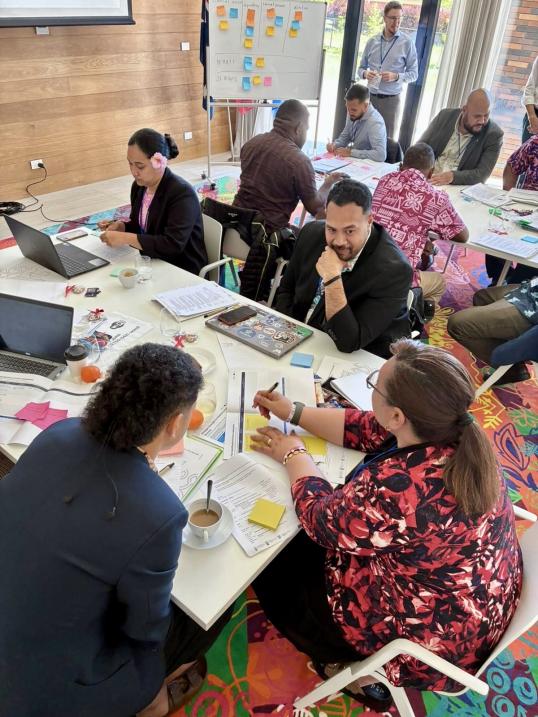
Participants gained practical tools and guidance to assess and prioritise risks to critical infrastructure, including how climate-related hazards and cyber threats can combine to disrupt essential services, and to identify measures to strengthen both cyber and climate resilience. Through interdependency mapping and strategic foresight sessions, participants examined how disruptions in one sector, such as telecommunications or energy, can cascade into other services like healthcare and government operations. These discussions were translated into practical resilience measures, including infrastructure redundancy, contingency planning to maintain essential services during disruptions, and stronger coordination between national authorities during cyber incident response. Participants also explored how relevant European approaches and frameworks for critical infrastructure protection and cybersecurity could be adapted to the specific needs and capacities of Pacific Island Countries.
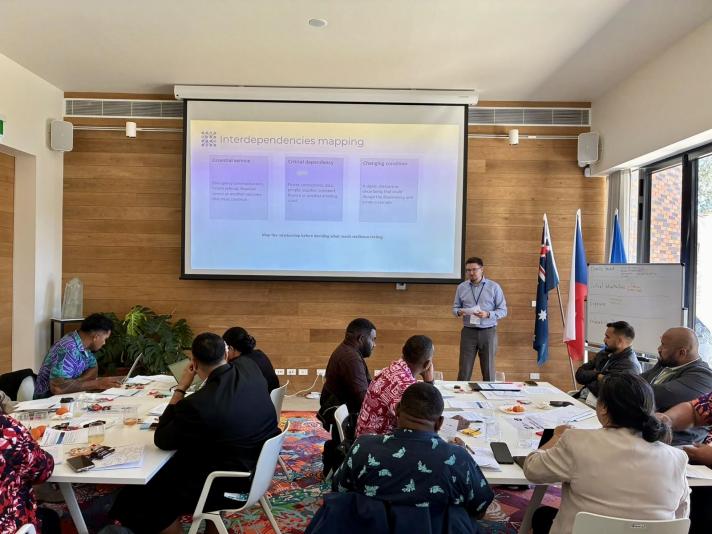
The workshop, led by EU CyberNet experts, was attended by 13 policymakers and regulators at both decision-making and technical expert levels from Fiji, Palau, Samoa, Tonga, Tuvalu and Vanuatu.
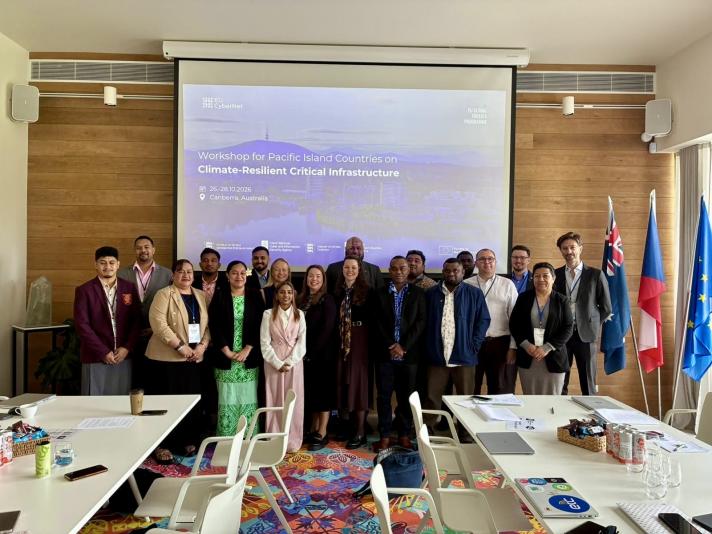
The workshop was organised by EU CyberNet, a project funded by the European Union within the EU Global Threats programme, in partnership with the Czech National Cyber and Information Security Agency (NÚKIB), the Delegation of the European Union to Australia, the Czech Embassy in Canberra, with support from the CyberVac programme of the Ministry of Foreign Affairs of the Czech Republic, the Embassy of Estonia in Canberra and Australian partners.
Project background

EU CyberNet II is implemented under the EU Global Threats programme, funded by the European Union.
This project aims to operate as a flexible facility working with governments to ensure that citizens of EU partner countries benefit from a global, open, free, secure, resilient and peaceful cyberspace.
- Publication date
- 29 October 2026
- Threat area
- Critical Infrastructure Protection