

Held over three days, the exercise, funded by the European Union, was conducted under the EU CBRN Risk Mitigation Centres of Excellence Initiative in cooperation with the United Nations Office of Counter-Terrorism (UNOCT), with strategic coordination and support provided by the African Atlantic Façade CBRN Regional Secretariat. The exercise brought together first responders and relevant national authorities from Benin, Cameroon, Côte d'Ivoire and Senegal to work through a complex, progressive crisis scenario, strengthening cross-border cooperation and coordinated emergency response capabilities.
A realistic scenario for managing a complex CBRN crisis
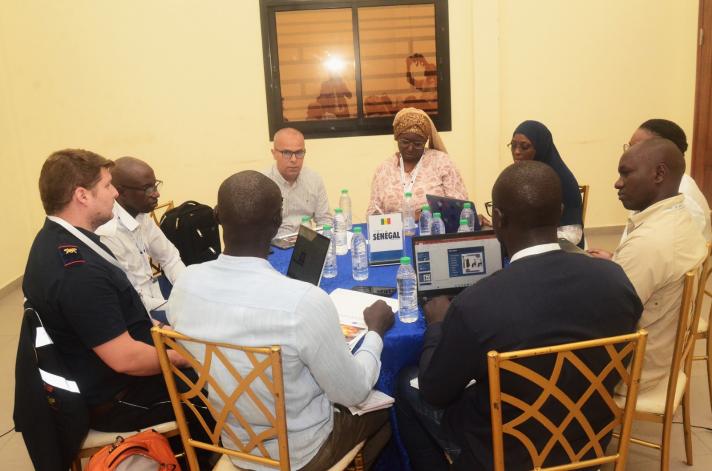
The exercise was built around a realistic scenario involving the illicit trafficking of a sealed Iridium-192 radioactive source, followed by a traffic accident involving the suspected vehicle and a liquefied petroleum gas (LPG) tanker. The incident rapidly evolved into a complex, multidimensional emergency requiring a coordinated, rapid response to radiological hazards, fire and rescue operations, with considerations for public health concerns, site security, public communication and international cooperation.
As the scenario unfolded, participants worked through the full crisis management cycle, from early warning and notification procedures to operational response and post-incident consequence management. The exercise enabled participating countries to test decision-making processes, inter-agency coordination, information sharing, and cross-border cooperation under realistic operational conditions.
Strengthening national capacities through regional cooperation
Over the course of three days, participants engaged in guided discussions, progressive scenario injects, structured questionnaires, reporting sessions, and plenary exchanges. This interactive methodology allowed them to work through the full spectrum of multinational crisis management – from strategic decision-making and operational coordination to tactical response – while promoting information sharing and interoperability among participating countries of the region.
Looking ahead: the 2027 Field Training Exercise in Côte d’Ivoire
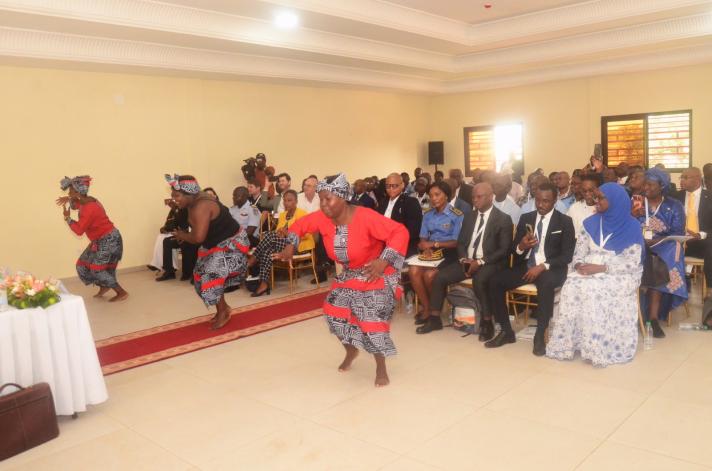
The regional Tabletop Exercise “Radioactive Vehicle” marks an important milestone in preparation for the regional Field Training Exercise scheduled to take place in Côte d’Ivoire in 2027. Lessons identified during the exercise will inform the design of a more operational, field-based exercise, further strengthening coordination and operational capacities of response teams in the African Atlantic Façade countries.
By bringing together national authorities, first responders, international partners, and regional experts, the exercise demonstrated the importance of collaborative planning and joint training in enhancing resilience against evolving Chemical, Biological, Radiological and Nuclear (CBRN) risks and threats. It also reaffirmed the commitment of participating countries and partners to strengthening regional cooperation and collective readiness to prevent, prepare for, and respond to CBRN incidents.
- Publication date
- 28 July 2026
- Threat area
- CBRN Risk Mitigation
- EU CBRN CoE Region
- AAF - African Atlantic Façade