

As wars in Ukraine and the Middle East heighten chemical and radiological risks, and advances in AI and biotech outpace global safeguards, this week the European Union Chemical, Biological, Radiological and Nuclear (CBRN) Risk Mitigation Centres of Excellence (EU CBRN CoE) convened more than 250 experts from over 70 countries to address one of the world’s most insidious threats: the misuse of CBRN materials.
Funded by the European Union and organised by the European Commission and the United Nations Interregional Crime and Justice Research Institute (UNICRI), the Academy is a flagship event of the EU CBRN CoE Initiative, the EU’s largest civilian external security programme.
Chemical, biological, radiological, and nuclear (CBRN) risks continue to evolve in an increasingly interconnected and uncertain world. Rapid technological advances, including artificial intelligence, advanced biotechnology, additive manufacturing, autonomous systems, and drone technologies, are creating new opportunities while also introducing complex challenges. At the same time, armed conflicts, geopolitical instability, and the growing capabilities of criminal and non-state actors are increasing the risk of misuse of CBRN materials, knowledge, and technologies. Addressing these challenges and protecting civilian populations requires sustained cooperation across countries, regions, and sectors.
Shared EU-Partner countries’ Priorities
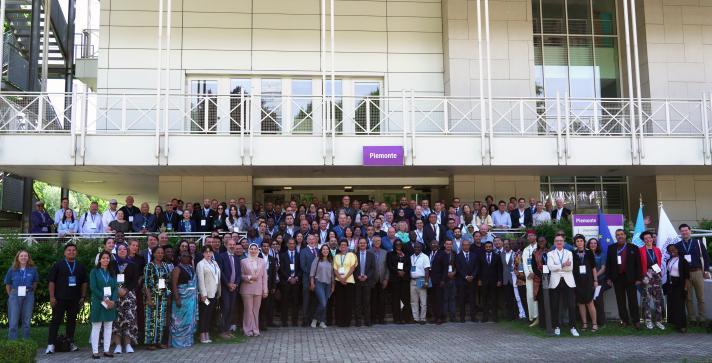
The EU CBRN CoE model is distinctive: the EU and partner countries identify capability gaps and drive cooperation through National Focal Points and Regional Secretariats together.
During the week, country presentations and regional exchanges helped connect political dialogue with practical areas for follow-up, including training, technical assistance, specialised equipment, institutional development and donor coordination. The Academy also created space for bilateral meetings, allowing countries, donors and technical partners to identify where cooperation can respond to concrete needs.
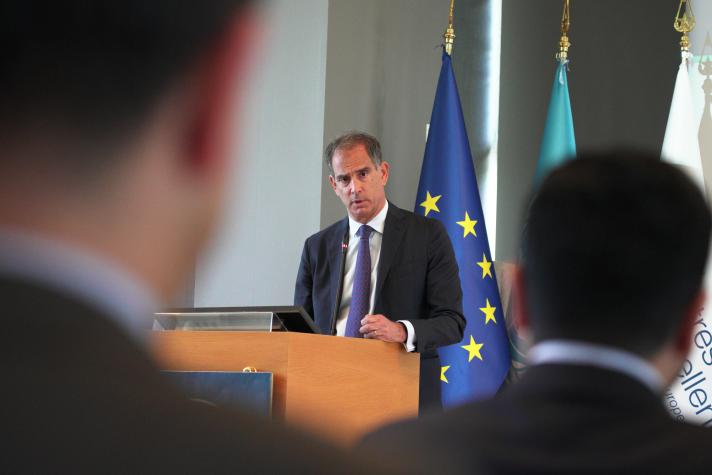
For the European Union, the logic of this cooperation is both global and shared. As Giovanni Squadrito, Head of Sector, Global Threats at the European Commission’s Service for Foreign Policy Instruments, noted:
“CBRN risks don’t respect borders. Through this global risk mitigation effort, the European Union invests in partner countries’ resilience because their security is ours. Turin is where we turn global challenges into collaborative solutions—before they become crises."
The EU’s support to partner-country resilience is therefore also an investment in collective security.
Capabilities on Display: From Mobile Labs to Detection Technologies
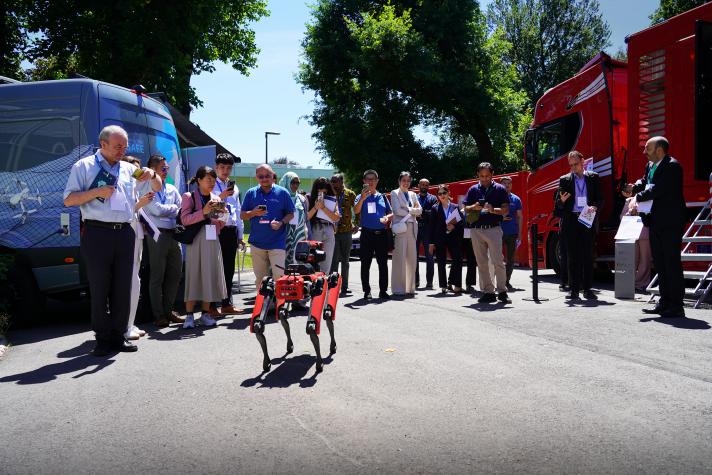
The Academy also showed what preparedness looks like in practice. Participants attended demonstrations of rescEU CBRN capabilities funded by the European Union, including mobile biological and chemical laboratories, detection, sampling and monitoring vehicles, robotic systems and advanced virtual training technologies. These demonstrations gave participants a direct view of how operational capabilities can support faster detection, safer field response and better coordination during a CBRN incident.
Italy’s role was central to this practical dimension. The presence of Italian Civil Protection and the Italian National Fire and Rescue Service helped connect the Academy to Europe’s emergency preparedness architecture and to capabilities that can be mobilised in crisis situations.
Luigi D’Angelo, Director General of the Emergency Management Office at Italian Civil Protection, described this approach as moving from crisis planning to prevention. "We’re not just planning for crises—we’re preventing them”.
The Technology Fair expanded this practical focus. More than 30 companies, technology providers and public institutions presented solutions related to detection, identification, monitoring, decontamination, emergency response, recovery and preparedness. For participating countries, this created a direct bridge between operational needs and available technical solutions. For technology providers, it offered a clearer understanding of the contexts in which their tools may be used.
Turning the EU CBRN Network into Practical Cooperation
The Academy also opened space for donor coordination and bilateral exchanges, linking country priorities with potential sources of expertise, funding and technical support. In this sense, the event connected visibility with substance: cooperation was grounded in concrete activities, partner-country perspectives and practical demonstrations. For UNICRI, the strength of the Academy lies in its ability to turn a global network into practical cooperation.
“What makes the EU CBRN CoE Initiative unique is the power of its international network. The Academy turns relationships into lasting partnerships, knowledge into practical capability, and dialogue into meaningful action,” said Leif Villadsen, Acting Director of UNICRI.
Implemented through the EU CBRN CoE Initiative, the Academy contributes to the EU’s broader work to strengthen global preparedness against CBRN risks. For more than sixteen years, the Initiative has supported partner countries through training, technical assistance, institutional development, specialised equipment and international cooperation.
In Turin, that long-term approach was translated into a clear message: no country can address CBRN risks alone and cooperation can turn shared risks into shared preparedness.
- Publication date
- 12 June 2026
- Threat area
- CBRN Risk Mitigation
- CBRN categories
- Biological
- Chemical
- Nuclear
- Radiological
- EU CBRN CoE Region
- AAF - African Atlantic Façade
- CA - Central Asia
- ECA - Eastern and Central Africa
- GCC - Gulf Cooperation Council Countries
- MIE - Middle East
- NAS - North Africa and Sahel
- SEA - South East Asia
- SEEE - South East and Eastern Europe