

Illicit flows often originate in South American countries, which are connected to European markets both directly and through strategic transit points in the Caribbean and West Africa, requiring coordinated enforcement responses across the entire supply chain.
From Random Inspections to Intelligence-Led Controls
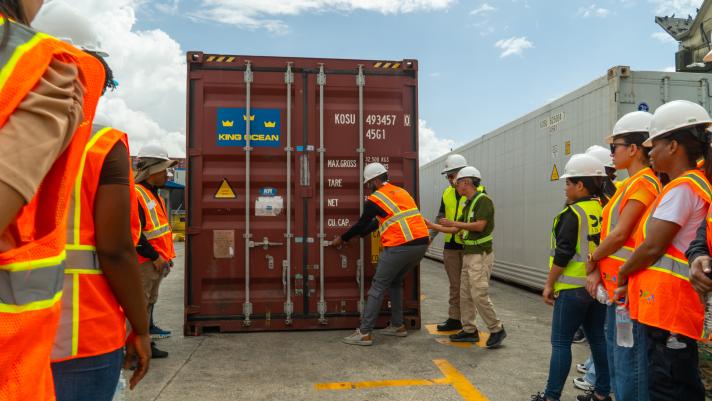
Responding to these evolving threats requires more than stronger border controls. As organised criminal groups operate across jurisdictions and continuously adapt their routes and methods, effective responses depend on international cooperation, intelligence-sharing and coordinated action. The EU Action on Container Control addresses these challenges by strengthening the capacity of national authorities to identify and intercept high-risk shipments while enhancing cooperation between customs, police, and other law enforcement agencies, as well as key private sector actors in the global supply chain.
Jointly implemented by the United Nations Office on Drugs and Crime (UNODC) through its Passenger and Cargo Control Programme (PCCP) and the World Customs Organization (WCO), and a key component of the EU Global Threats programme, the Action supports countries in moving away from random inspections towards intelligence-led risk assessment and targeted container controls. By combining theoretical and practical training with follow-up mentoring and the provision of equipment, as well as the promotion of information and best practice exchange, the initiative contributes to stronger borders while facilitating legitimate trade.
24 activities implemented since early 2026 across Côte d’Ivoire, Ghana, Benin, Togo, Senegal, Ecuador, Colombia, Panama and the Dominican Republic, including:
- Technical needs assessments
- Theoretical and practical training on risk management and container profiling
- Follow-up mentoring
- Regional workshops
- Provision of detection equipment
Together, these interventions are strengthening the operational capacities of national authorities in key countries along some of the world’s busiest maritime trafficking corridors.
Strengthening Targeting Capacities in Latin America and the Caribbean
Targeted trainings and mentoring in the Dominican Republic, Panama, Colombia and Ecuador strengthened national authorities’ targeting capacities through the application of intelligence-led risk assessment methodologies and information-sharing. In the Dominican Republic, a training in Santo Domingo brought together representatives from Customs, the National Directorate for Drug Control, the Specialized Port Security Corps and port authorities of Haina and Caucedo. Practical exercises at Haina International Terminal enabled participants to apply risk assessment techniques in an operational environment while reinforcing the use of the WCO’s secure communication platform to facilitate operational information exchange.
Reinforcing Port Control Capacities in West Africa
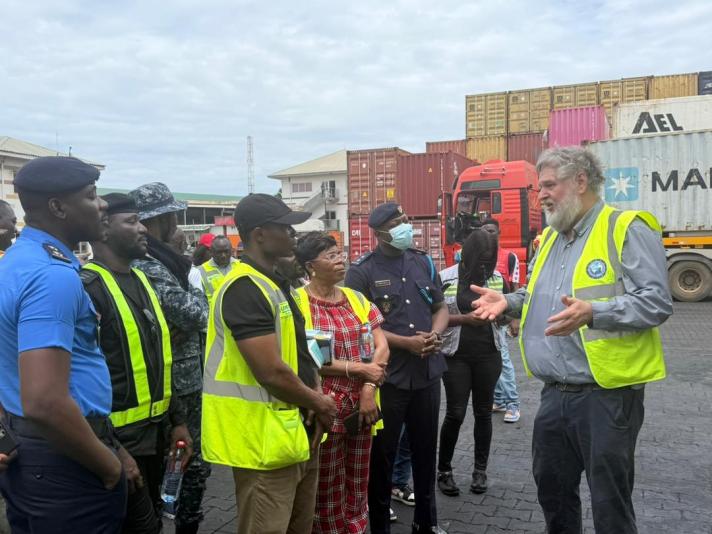
Following technical needs assessment missions in Ghana, Benin and Togo, UNODC and WCO delivered refresher trainings to Port Control Units at the Ports of Tema in Ghana and Cotonou in Benin, tailored to frontline officers, such as Customs, Marine Police and other law enforcement agencies. Building on previous experience, the trainings reinforced officers' competencies in intelligence-led risk management, targeting and container profiling, commercial document analysis, container inspection techniques, emerging trafficking trends, concealment methods, CITES regulations, evidence handling and health and safety procedures in port operations.
By combining classroom instruction with practical exercises, these trainings further strengthened the ability of officers to detect high-risk shipments moving through maritime supply chains.
Building a Coordinated Response Across the Transatlantic Corridor
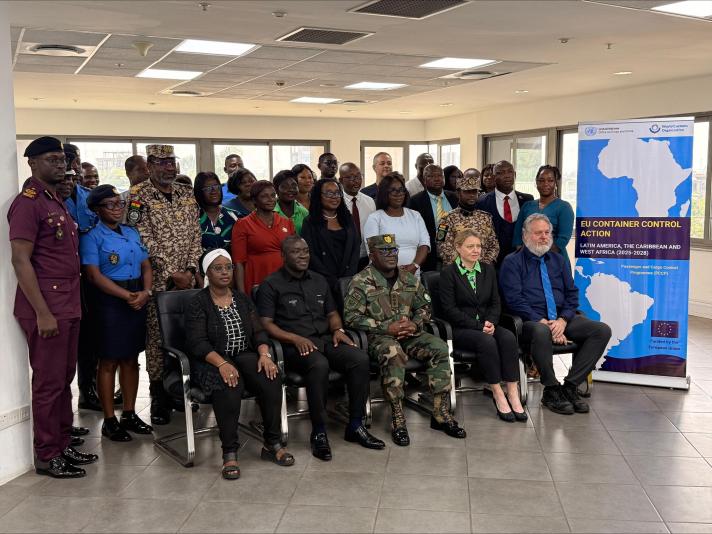
While tailored to national operational priorities, these activities pursue a common objective: strengthening countries' ability to identify high-risk containers before inspection takes place, improving operational information exchange and reinforcing cooperation among national agencies and international partners, supporting a more coordinated response to organised crime along the transatlantic corridor.
About the EU Action on Container Control in Latin America, the Caribbean and West Africa
A core component of the EU Global Threats programme, funded by the European Union, this project is implemented by the UNODC Passenger and Cargo Control Programme (PCCP) and the World Customs Organization (WCO). The Action aims to support the disruption of illicit trafficking via containers by strengthening capacities to identify and search suspicious containers, enhancing information and intelligence exchange, and improving interdiction capacities at major international seaports, dry ports, land borders and container terminals.
- Publication date
- 17 August 2026
- Threat area
- Fight against Organised Crime