

Operation Paramuno was coordinated by the World Customs Organization (WCO) in partnership with the Maritime Analysis and Operations Centre – Narcotics (MAOC-N). Over the course of 16 days in March 2025, 19 partner countries across Latin America, the Caribbean, and West and Central Africa worked together to detect and disrupt criminal activities linked to private and non-commercial aircraft.
Key Results:
- 1,897 general aviation controls conducted via the WCO Geoportal, a key intelligence-sharing tool.
- 2.2 tons of drugs seized.
- Dozens of aircraft impounded for fiscal fraud.
- More than 100 undeclared runways uncovered.
- Weapons and other contraband confiscated.
These results highlight the increasing use of general aviation by criminal networks and the need for continued monitoring, intelligence-sharing, and cross-border cooperation.
The photographs below illustrate field activities carried out during the operation across five participating countries: Côte d’Ivoire, Peru, Uruguay, Brazil, and Colombia. They reflect the operational readiness developed through successive COLIBRI capacity-building missions, including scoping, training, mentoring, and pre-operational coordination activities delivered since the launch of COLIBRI Phase II.
Brazil – Canine Unit and Tarmac Surveillance
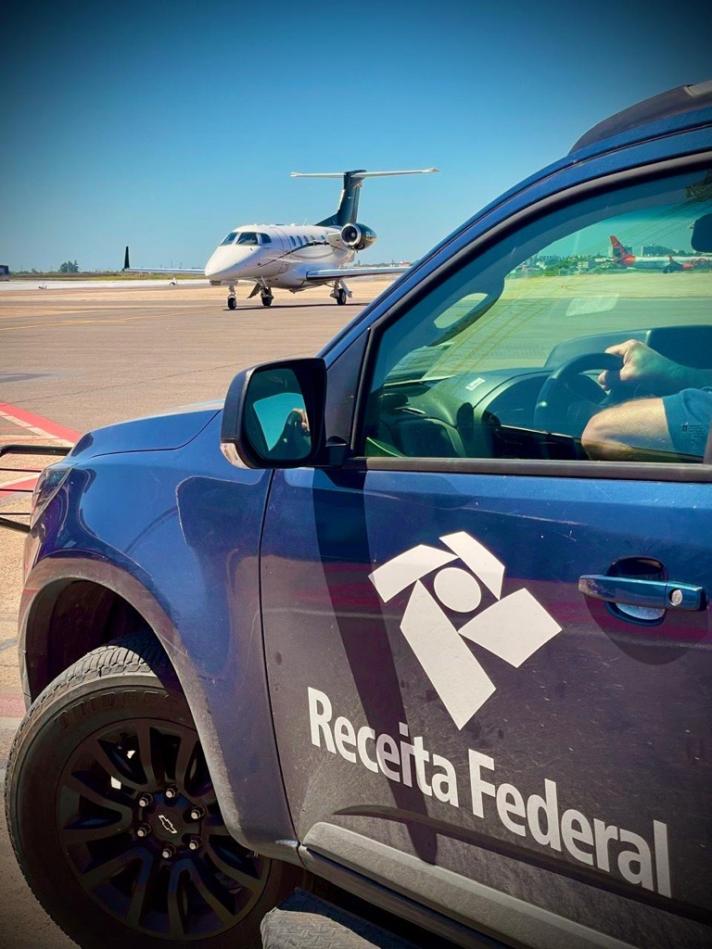
Brazil presents one of the most complex General Aviation enforcement environments in Latin America, with vast territory, extensive airstrip networks, and long borders with major cocaine-producing countries. The Receita Federal do Brasil (Brazilian Federal Revenue Service) is the primary customs authority engaged in GA controls and an active COLIBRI partner. The two images from Brazil illustrate both canine detection capacity and mobile tarmac surveillance – a combination that serves both detection and deterrence functions, signalling that GA movements are subject to active oversight by trained customs authorities.
Uruguay – Cabin Inspection
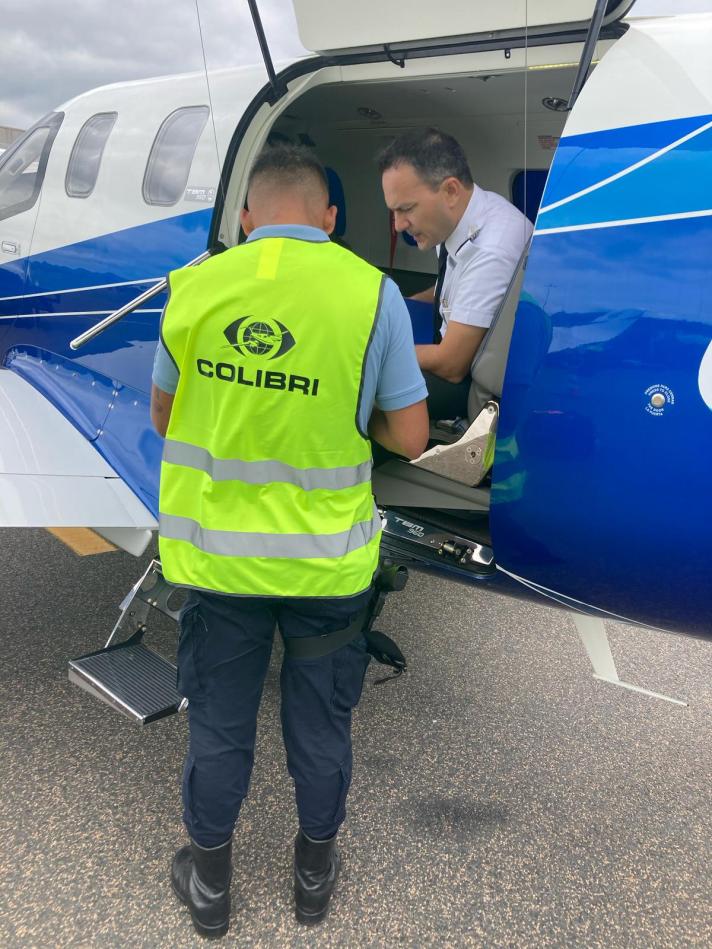
Uruguay occupies a strategically important position in the Southern Cone as a transit and re-export point for cocaine moving through the region toward Europe and West Africa. Under the COLIBRI Project, Uruguayan authorities have developed capacity to conduct systematic GA inspections and coordinate across agencies at key airports. The image captures a vested officer engaged in a direct cabin inspection of an aircraft, involving verification of documents, cargo, and the aircraft interior – central to the operational methodology promoted by COLIBRI and put into practice during Operation COLIBRI Paramuno.
About COLIBRI II
Funded by the European Union’s Service for Foreign Policy Instruments (FPI) with a budget of €4.5 million, COLIBRI II is a three-and-a-half-year initiative (2023-2026) aimed at strengthening the capacity of law enforcement authorities in 19 partner countries to prevent and combat organised crime and illicit trafficking in civil aviation.
A key component of the project is the WCO Geoportal, which facilitates real-time information exchange on suspicious aviation activities, enhancing the ability of national authorities to detect and respond to threats.
- Publication date
- 15 June 2026
- Threat area
- Fight against Organised Crime
- Events
- EU Crime Fighting Week 2026