

To counter this surge, SEACOP brought together 160 law enforcement and security professionals from both sides of the Atlantic for a landmark Port Security Seminar in Belgium and online.
Connecting the dots across oceans
This seminar was designed to connect operational realities in Latin America, the Caribbean, and West Africa with European law enforcement strategies.
The room brought together diverse expertise: officials from the European External Action Service, UNODC, MAOC-N, the UK's National Crime Agency, private sector representatives from IRENA and Ambrey, as well as law enforcement and security officials from across SEACOP regions and European ports.
The seminar was not a theoretical discussion. It was practitioners sharing what works on the ground.
European experts set the context. MAOC-N, Netherlands Police, the European Commission as well as Hamburg State Criminal Police gave several presentations, outlining the current threat landscape and enforcement strategies as European ports navigate this security challenge.
A cross-Atlantic exchange followed, making this seminar unique: port security officials from Argentina, Barbados, Peru, and Senegal presented their processes, systems, and technologies - demonstrating that innovative solutions exist across all SEACOP regions, not just at destination ports.
From theory to practice: Visit to Antwerp port
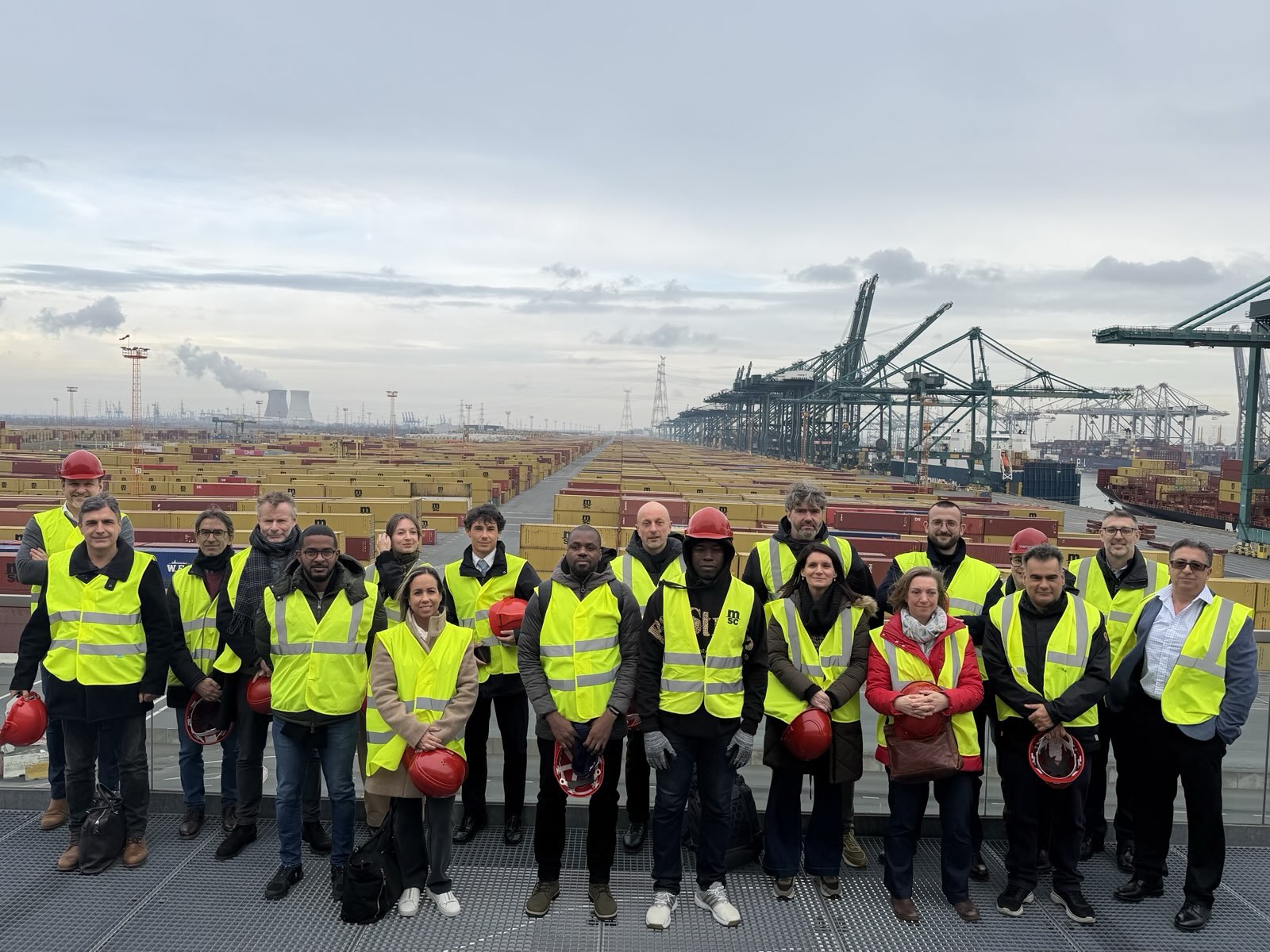
The seminar ended with a site visit to the Port of Antwerp - Europe's largest container port and a frontline in this battle. The Federal Judicial Police Belgium-Antwerp Drugs Department briefed delegates before the Port Facility Security Officer led a comprehensive tour of the MSC PSA European Terminal (MPET).
Delegates witnessed key samples of European port security best-practices, such as public-private partnerships, anti-corruption awareness campaigns, sophisticated information-sharing between police, customs, and private operators, and the strategic use of both physical and electronic security systems.
Building networks that last

The transatlantic law enforcement community that gathered in Brussels and Antwerp is now better equipped to investigate illicit cross-Atlantic traffic and the organised crime networks behind it - not through isolated national efforts, but through coordinated, intelligence-led cooperation. As SEACOP continues its mission throughout 2026, events like this seminar demonstrate why partnerships remain one of our most powerful tools against transnational crime.
- Publication date
- 25 January 2026
- Threat area
- Fight against Organised Crime