

CBRN risk context
Chemical, Biological, Radiological, and Nuclear (CBRN) incidents can arise from materials used in healthcare, industry, research, and transport. Although these materials are essential in daily life, accidents or misuse can quickly create complex emergencies involving contamination, mass casualties, and public concern. In these situations, effective response depends on how well emergency services, hospitals, and public authorities coordinate decisions, communication, and patient care. Strengthening preparedness is therefore essential to reduce harm, protect responders, and maintain continuity of medical services.
Azerbaijan advances its national CBRN medical training system
On 24–25 February 2026, in Baku, the Science and Technology Center in Ukraine (STCU), in collaboration with the Academy of the Ministry of Emergency Situations of the Republic of Azerbaijan and the Azerbaijani Management Union of Medical Territorial Units (TABIB), conducted the second National CBRN Emergency Medicine Training in Azerbaijan.
The training was delivered under EU CBRN CoE Project 88, “Strengthening of CBRN Medical Preparedness and Response Capabilities in South East and Eastern European countries,” funded by the EU CBRN Risk Mitigation Centres of Excellence.
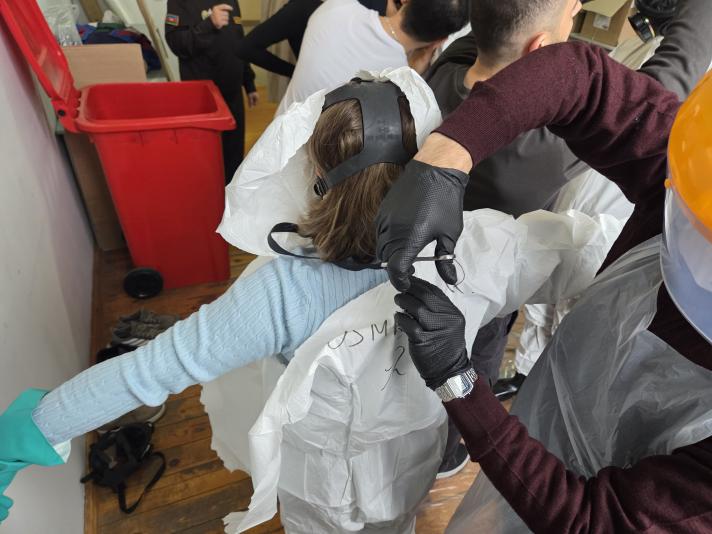
Led by Azerbaijani Master Trainers, this edition showcased Project 88’s capacity-building outcomes, demonstrating that national experts could deliver high-quality CBRN emergency medicine training independently. The second national training marked an important step in strengthening Azerbaijan’s coordinated system for CBRN medical emergencies and reinforced a repeatable approach that can be expanded over time.
Tailored learning across the full response chain
The two-day programme brought together a broad group of professionals, including first responders, hospital personnel, emergency managers, para-medical staff, and medical specialists. This multi-sector approach reflected the realities of CBRN incidents, where effective response depends on coordination across institutions and levels of responsibility.
The training was structured around target groups with specific learning objectives. First-line responders focused on pre-hospital priorities, including initial assessment, triage, decontamination, and patient stabilisation. Second-line responders concentrated on hospital-based management, including contamination control, patient care protocols, and coordination with field teams. Institutional managers addressed strategic oversight, resource allocation, and decision-making during large-scale incidents.
Para-medical personnel strengthened their skills in immediate field support, while medical personnel expanded their knowledge of diagnosis, treatment, and longer-term patient management in CBRN-related scenarios. This targeted structure helped participants deepen role-specific competencies while improving coordination across the national response system.
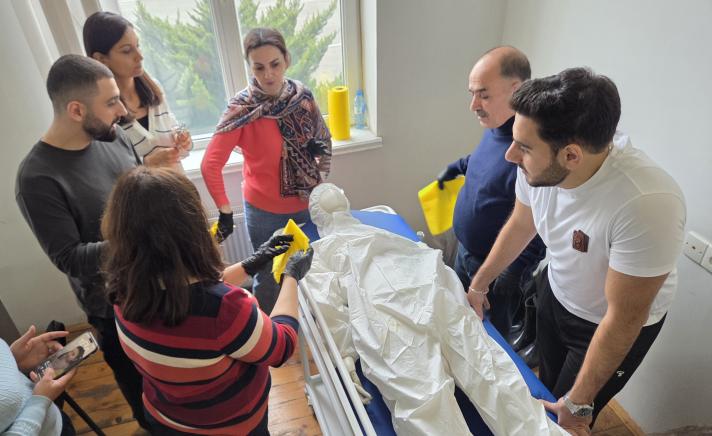
Discover the full exercise gallery
Practical exercises build confidence and interoperability
The training combined interactive lectures, practical sessions, and scenario-based simulations designed to mirror real emergency conditions. Through case studies and applied exercises, participants tested their ability to translate procedures into action, make rapid decisions, and coordinate under pressure.
These activities supported both technical learning and interagency cooperation. Participants exchanged experiences, compared approaches, and identified ways to improve collaboration among emergency responders, hospitals, and management authorities. By addressing both operational and institutional needs, the training contributed to a more integrated national response capability for incidents involving hazardous materials.
Sustainable progress and regional contribution
The successful delivery of Azerbaijan’s national training, following earlier capacity-building efforts, demonstrates growing national capability to sustain and expand CBRN emergency medicine training. It shows that Azerbaijan is strengthening both the institutional and human foundations needed for long-term preparedness.
Through this progress, Azerbaijan is also reinforcing its role as an active and capable partner within the regional network of South East and Eastern European countries, working to improve resilience against CBRN threats. The experience gained through this initiative provides a strong basis for future national development and regional cooperation in CBRN emergency medicine preparedness and response.
Project background
The training in Baku was delivered under EU CBRN CoE Project 88, “Strengthening of CBRN Medical Preparedness and Response Capabilities in South East and Eastern European countries.” The project supports partner countries in improving medical preparedness, response coordination, and sustainable training capacity for CBRN incidents through national-level training and institutional cooperation.
- Publication date
- 2 March 2026
- Threat area
- CBRN Risk Mitigation
- CBRN areas
- First response
- Public and infrastructure protection
- Public health impact mitigation
- Safety and security
- CBRN categories
- Biological
- Chemical
- Nuclear
- Radiological
- EU CBRN CoE Region
- SEEE - South East and Eastern Europe