

The event focused on strengthening women’s participation and leadership in strategic trade controls, while identifying practical steps to advance gender equality in this highly specialised field.
The conference was jointly organised by the EU P2P Export Control Programmes on dual-use goods (P105) and arms export controls (COARM), alongside the Canadian Fund for Local Initiatives, the OSCE Conflict Prevention Centre, and the OSCE Programme Office in Bishkek.
Building inclusive and effective systems
Over two days, the discussions centred on how Strategic Trade Control systems can become more inclusive while also improving their effectiveness. Participants emphasised that diversity,particularly the increased participation of women, not only advances gender equality but also enhances decision-making quality and institutional resilience. Key insights were shared through speeches, expert presentations, and panel discussions.
The opening session highlighted the political importance of the topic. Representatives from the Kyrgyz government and parliament stressed the need for modern, inclusive governance structures to support the continued development of national export control systems. International partners underlined that sustainable progress depends on long-term cooperation and capacity-building efforts.
In her keynote address, BAFA President Dr. Mandy Pastohr underscored the value of diverse perspectives in strategic trade controls, noting that gender-equitable structures are not only a matter of fairness but also contribute directly to stronger institutional performance.
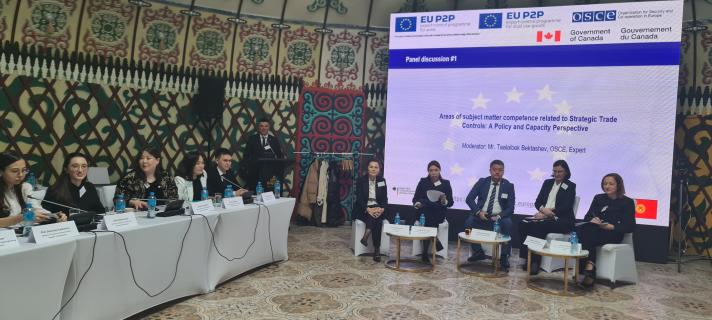
Addressing barriers and strengthening capacity
Panel discussions on the first day explored the professional competencies required in export control, with experts from Europe and Central Asia outlining institutional frameworks, training pathways, and the need for specialised expertise. These discussions also examined structural and societal barriers that can limit women’s access to the field, including institutional constraints, limited professional networks, and unclear career pathways.
Another key theme was translating policy commitments into concrete action. Participants discussed how gender mainstreaming can be effectively integrated into export control systems, highlighting the importance of clear responsibilities, transparent procedures, and targeted support measures to ensure lasting progress.
From dialogue to actions
The second day shifted focus to leadership, governance, and international cooperation. Examples from Kyrgyzstan demonstrated that targeted initiatives to promote women in export controls are already yielding tangible results. Discussions also explored practical ways to build leadership skills, including mentoring programmes, specialised training, and stronger institutional support.
An interactive policy session enabled participants to turn dialogue into action, developing concrete recommendations. Priority areas included strengthening institutional capacity, supporting the next generation of professionals, and improving networking opportunities for women in strategic trade.
A milestone for the region
The conference highlighted that promoting women in export control is not a standalone issue but a core element of modern, effective export control systems. Its outcomes reinforced the importance of regional cooperation and sustained international support in building inclusive and resilient frameworks.
Through in-depth professional exchanges and practical recommendations, the event marked a significant step forward for export control development in Central Asia. It sent also a clear signal on the importance of diversity and leadership in this critical area of security policy.
As the first event of its kind in the region, under the EU-funded P105 and COARM outreach programmes, the conference highlighted the leadership role of Kazakhstan and the Kyrgyz Republic. Both countries have shown a strong commitment to advancing women’s participation in strategic trade controls, setting a positive example for neighbouring states and contributing to a more inclusive regional approach.
- Publication date
- 21 April 2026
- Threat area
- CBRN Risk Mitigation
- CBRN areas
- Import/export control